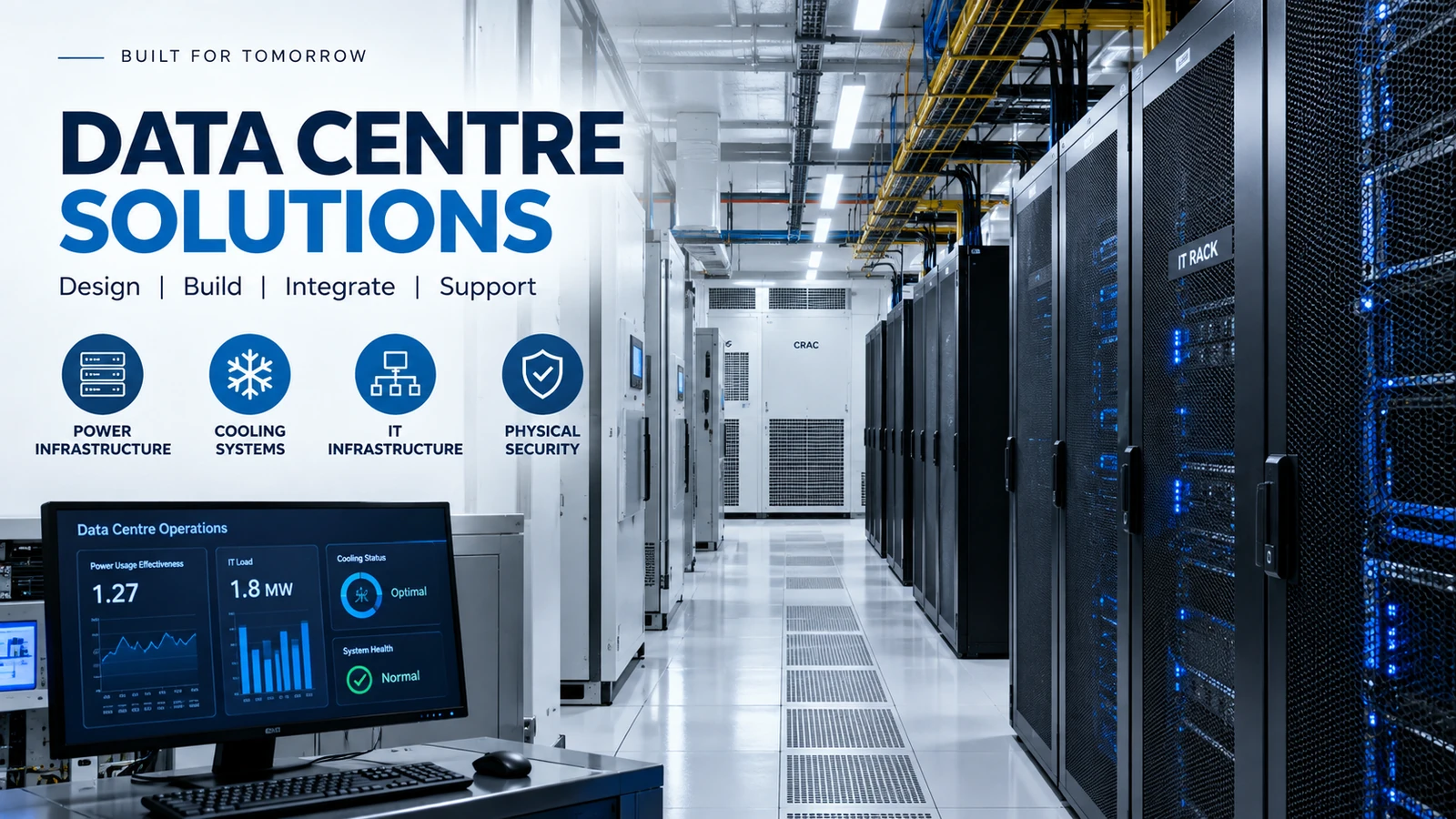
A data centre is not an IT project with building services attached. It is a building services project with IT inside it, and the failure modes that matter — thermal, electrical, hydraulic, detection — all sit outside the rack.
RAHCore delivers the non-IT environment alongside the IT layer: the power path, the thermal design, the containment, the detection and suppression, the cabling routes, and the monitoring that makes all of it observable.
REQUIREMENTThe requirement this addresses
Data centre scopes are commonly split between an IT integrator, an electrical contractor, an HVAC contractor and a fire vendor. Each certifies its own package. Nobody owns the interfaces — the point where UPS sizing meets actual rack density, where the containment layout meets the detection zoning, where a cable route crosses the power path. Those interfaces are where commissioning slips, and where the first year of operation produces surprises.
DELIVERYHow RAHCore approaches it
We design the layers as distinct engineering disciplines, then coordinate them against one set of drawings and one commissioning schedule. Capacity assumptions are stated once and carried through every discipline, so the electrical design, the cooling design and the space plan are all answering the same question about load.
INTEGRATIONIntegration with other systems
The data centre scope draws directly on our electrical, HVAC, fire safety and ELV capability. That is the point: the same organisation that sizes the UPS also specifies the precision cooling and zones the detection, so the assumptions cannot diverge between packages.
LIFECYCLELifecycle and maintenance
Mission-critical space is where deferred maintenance is least survivable. AMC and O&M terms — inspection frequency, spares strategy, response and escalation — are agreed as part of the engagement rather than negotiated after handover, and access for maintenance is a design input rather than a later discovery.